
The Lifecycle of a Rat: What Homeowners Should Know About Rat Behavior
Rats are among the most common pests in homes and businesses. Understanding the lifecycle of a rat and its behavior is essential for homeowners looking to protect their property from infestations. This knowledge not only helps in identifying the signs of a rat problem but also provides insight into effective rat control methods.
What is the Lifecycle of a Rat?
Rats go through several stages in their lifecycle, each with distinct behaviors and characteristics. Understanding these stages helps homeowners take timely action to prevent an infestation from becoming a serious problem.
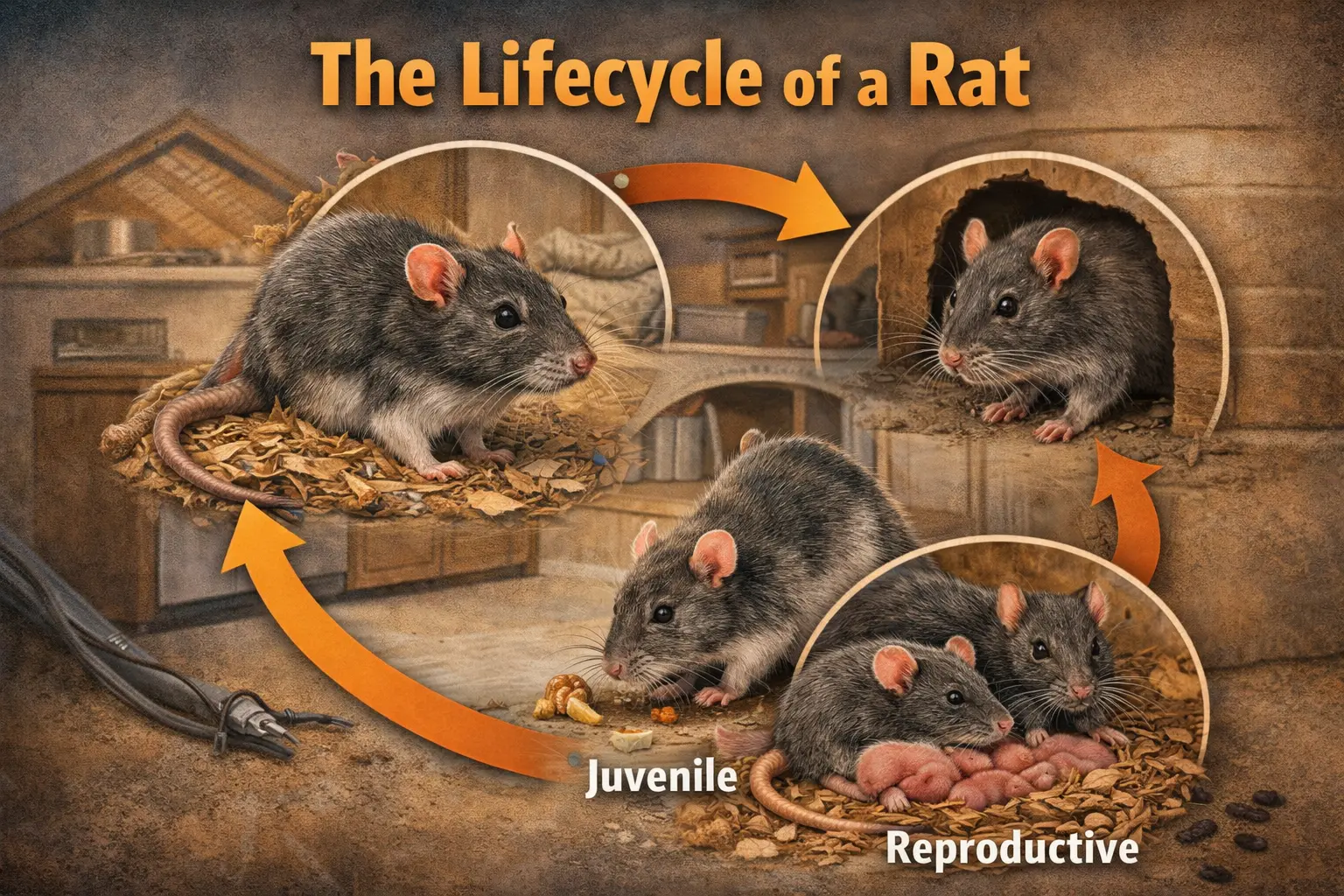
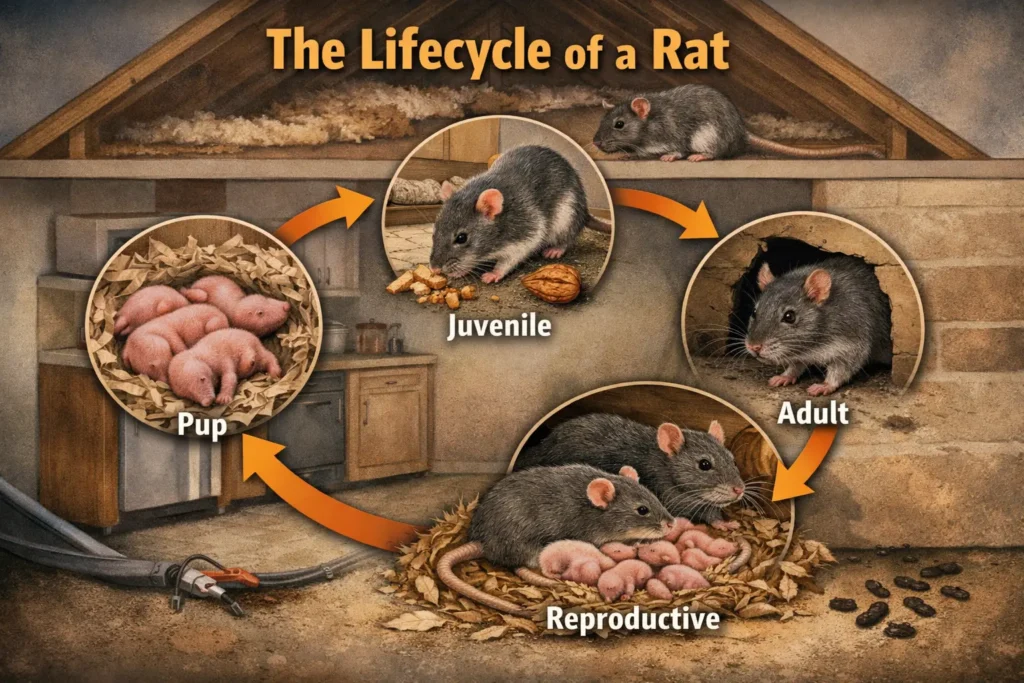
- Pup (Baby Rat): Rats are born helpless and rely entirely on their mother for survival. In the first few weeks of life, they remain in the nest, feeding on their mother’s milk. The pup stage lasts for about 2-3 weeks before rats start to become more active.
- Juvenile Rat: Between 3 weeks and 2-3 months, rats transition into the juvenile phase. They begin exploring their environment, learning essential survival behaviors like foraging and climbing. Juvenile rats are highly active and can sometimes be seen moving around the house looking for food.
- Adult Rat: By the time rats are 3-4 months old, they reach adulthood and are capable of reproduction. At this stage, they start seeking nesting spots in hidden, undisturbed areas, typically within the walls, attics, or basements of homes.
- Reproductive Phase: Adult rats can reproduce as early as 5 weeks old, leading to rapid population growth. Female rats can give birth to litters multiple times a year, and each litter can contain as many as 12 pups. This makes their lifecycle a significant factor in how quickly infestations can escalate.
How Rats Behave During Different Seasons
Rats are active year-round, but their behavior shifts depending on the season. During colder months, rats often seek warmth and shelter, making homes and businesses more attractive. In the spring and summer, rats are more likely to be seen outside searching for food, while in the fall, they begin looking for indoor shelter again, leading to an increase in infestations.
Winter: As temperatures drop, rats move indoors to find warmth and food. They often nest in attics, basements, and behind walls, staying close to sources of food.
Spring and Summer: During warmer months, rats are more likely to be active outdoors, but they will also breed more frequently. Their increased activity during this time can lead to a rise in the rat population.
Fall: With colder weather approaching, rats begin searching for shelter. This is when infestations are most likely to occur indoors, especially if entry points have not been sealed.
The Dangers of a Rat Infestation
Rats are not just a nuisance; they pose several risks to both your home and health.
Health Risks: Rats are carriers of various diseases, including leptospirosis, hantavirus, and salmonella. Their urine, droppings, and saliva can spread bacteria and viruses, putting the health of your family and pets at risk.
Damage to Property: Rats are notorious for chewing on wires, insulation, and even furniture. This behavior can cause severe damage to your property, and in some cases, it can lead to electrical fires.
Food Contamination: Rats often scavenge in kitchens, pantries, and garbage. Their urine and feces contaminate food, making it unsafe for consumption.
Signs of a Rat Infestation in Your Home
The sooner you detect a rat infestation, the quicker you can take action to prevent further damage. Keep an eye out for the following signs:
- Droppings: Rat droppings are often found near food sources or nests. They are typically dark and can be about the size of a raisin.
- Gnaw Marks: Rats will chew on anything to sharpen their teeth. Look for gnaw marks on wood, plastic, wires, or even food containers.
- Sounds: Scratching or scurrying noises, especially in the walls, ceiling, or attic, indicate rat activity.
- Smells: An unpleasant, musky odor can be a sign of a rat infestation. This smell comes from their urine, feces, and nests.
The Importance of Early Detection and Prevention
It’s essential to act quickly when you notice signs of a rat infestation. Rats reproduce quickly, and an infestation can get out of hand before you know it. Early detection allows homeowners to prevent serious property damage and reduce health risks.
Preventing Rats: One of the most effective ways to keep rats away is by sealing all potential entry points. This includes fixing cracks in walls, sealing gaps around doors and windows, and covering any holes in roofs or vents. Ensuring that food and waste are stored securely can also deter rats from coming inside.
Effective Rat Control Methods
Whether you’re dealing with a small infestation or a larger one, there are several methods for controlling rats.
- DIY Solutions: Setting traps and using rodent baits can help reduce a rat population. Snap traps and glue boards are commonly used methods, but they may not be as effective if the infestation is extensive.
- Professional Rat Control Services: When DIY methods fall short, it’s time to call a pest control expert. Professionals can inspect your home, identify entry points, and implement a comprehensive rat control plan that includes trapping, baiting, and sealing.
- Eco-Friendly Methods: There are natural alternatives to chemical-based control, such as peppermint oil, ultrasonic devices, and humane traps. These options are safe for families and pets, though they might not be as effective in severe infestations.
How to Create a Rat-Proof Home
Keeping rats out of your home requires more than just setting traps. You must make your property less inviting to them in the first place. Here’s how:
- Seal Gaps: Inspect your home for cracks and holes, especially around windows, doors, and vents. Use steel wool or caulk to close them up.
- Maintain Cleanliness: Rats are attracted to food and trash. Keep your kitchen and pantry tidy, and take out the garbage regularly. Store food in airtight containers.
- Trim Trees and Bushes: Rats can climb trees and use branches to access roofs. Trim back any overhanging branches or dense vegetation near your home.
When to Call a Professional for Rat Removal
If you’ve noticed signs of a rat infestation and your efforts at control aren’t working, it’s time to call in a professional. A pest control expert can provide a thorough inspection and use advanced methods to eliminate the problem. Professional rat removal is often the most effective way to handle an infestation and prevent future problems.
Bottom Line
Understanding the lifecycle and behavior of rats is crucial for homeowners who want to protect their homes from infestations. By recognizing the signs of a rat problem early and taking preventative measures, you can avoid the health risks and property damage associated with these pests. Whether you’re handling the issue yourself or seeking professional help, early intervention is key to keeping your home rat-free.