
Why Rats Suddenly Appear in Homes (Common Causes)
Many homeowners are surprised when they suddenly notice scratching sounds in the walls, droppings in the kitchen, or gnaw marks around storage areas. It can feel as if rats appeared overnight. In reality, these pests rarely arrive without a reason. Their presence usually develops slowly until the signs finally become noticeable.
Understanding why rats move into homes is important for preventing an infestation before it grows into a serious problem. When the underlying causes are identified, homeowners can take practical steps to protect their property and avoid repeated rodent activity.
Why Rats Enter Homes in the First Place
Like most animals, rats are constantly searching for three basic things: food, water, and shelter. Houses provide all of these necessities in a stable and protected environment.
Indoor spaces also offer warmth during cold weather and protection from predators. Once a rat discovers a comfortable location with reliable resources, it may return repeatedly and even establish a nest. Over time, a small presence can turn into a larger infestation.
Common Causes of Rat Activity Inside Homes
Easy Access Through Small Openings
One of the main reasons rats appear inside homes is simple access. Many properties have tiny openings that go unnoticed by homeowners. Rats are extremely flexible and can squeeze through surprisingly small gaps.
Typical entry points include spaces around pipes, damaged vents, cracks in the foundation, and small gaps beneath doors. Rooflines and attic vents are also common access areas. When these openings are left unsealed, rodents can move indoors with little resistance.
Even homes that appear well maintained may have hidden gaps that provide a direct pathway inside.
Food Sources Around the Home
Food availability is another major factor that attracts rats. These animals have a strong sense of smell and can detect food from a distance. When food sources are easy to access, rodents are more likely to settle nearby.
Common attractants include garbage bins that are not tightly sealed, pet food left outdoors, bird feeders, and uncovered compost piles. Fallen fruit from backyard trees can also become a reliable food supply.
Inside the home, open pantry items, crumbs on kitchen floors, or poorly sealed food containers can encourage rats to stay longer once they enter.
Outdoor Conditions That Push Rats Indoors
Environmental changes often drive rats to seek shelter inside buildings. When outdoor conditions become difficult, houses offer a warm and dry alternative.
Cold weather is one of the most common triggers. As temperatures drop, rodents begin searching for insulated spaces such as attics and wall cavities. Heavy rainfall and flooding can also push rats away from burrows and underground habitats.
Construction activity nearby may destroy their natural hiding places, forcing them to relocate into nearby homes and structures.
Cluttered Storage Areas
Rats prefer dark, quiet spaces where they can hide without disturbance. Cluttered areas inside a home provide ideal nesting environments.
Attics, basements, garages, and crawl spaces are especially attractive because they are rarely visited and often filled with storage boxes or unused materials. Piles of cardboard, old furniture, or stored clothing create hidden corners where rats can build nests safely.
Once established in these areas, they may begin exploring other parts of the home in search of food.
Structural Damage or Poor Maintenance
Buildings that have structural damage or aging materials are more vulnerable to rodent entry. Over time, small problems in a property can create opportunities for pests to move inside.
Broken roof tiles, damaged siding, worn door seals, and cracked foundations all provide potential entry points. Even small structural weaknesses can become access routes if they are not repaired quickly.
Regular property maintenance plays an important role in keeping rodents out.

Common Places Rats Hide Inside Homes
Once rats enter a house, they tend to settle in hidden areas where they can avoid human activity. These locations allow them to build nests and raise young without disturbance.
Attics are one of the most common nesting areas because they are warm and rarely accessed. Wall cavities also provide quiet spaces where rats can move freely while remaining unseen.
Other common hiding spots include crawl spaces, behind kitchen appliances, inside insulation, and within storage boxes. These areas offer both protection and easy access to food sources within the home.
Early Signs of a Rat Problem
Many infestations are first discovered through subtle warning signs. Paying attention to these early indicators can help homeowners act before the situation worsens.
Scratching or scurrying noises inside walls are often heard during the night when rats are most active. Small dark droppings around kitchen cabinets or storage areas are another clear sign of activity.
Gnaw marks on wood, plastic, or food packaging can also indicate their presence. Greasy rub marks along walls, unusual pet behavior, and strong musky odors may appear as the infestation grows.
Risks of Having Rats in Your Home
A rat infestation can lead to several serious problems if it is not addressed quickly. The most common risks include:
- Health contamination – Rats can spread bacteria by contaminating kitchen surfaces, food storage areas, and utensils.
- Food contamination – Droppings and urine can spoil stored food and pantry items.
- Allergic reactions – Rat hair, urine, and droppings may trigger allergies or respiratory irritation in some people.
- Electrical hazards – Rats often chew electrical wires, which can increase the risk of short circuits or house fires.
- Insulation damage – They may tear insulation in attics or walls while creating nesting areas.
- Damage to stored belongings – Rats frequently chew cardboard boxes, clothing, furniture, and other stored items.
- Structural damage – Gnawing on wood and building materials can gradually weaken parts of a home.
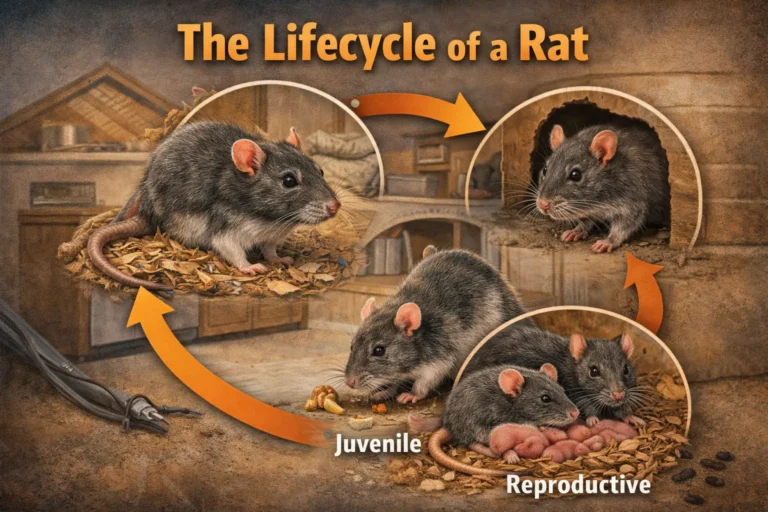
- Rapid population growth – Rats reproduce quickly, meaning a small problem can turn into a large infestation in a short time.
How to Prevent Rats From Entering Your Home
Preventing rat activity starts with removing the conditions that attract them.
Sealing entry points is one of the most effective steps. Cracks in foundations, gaps around pipes, and damaged vents should be repaired as soon as possible. Installing sturdy covers over vents can also block access.
Food sources should be carefully managed. Store dry foods in sealed containers, keep garbage bins tightly closed, and clean kitchen surfaces regularly.
Outdoor maintenance also helps reduce the risk. Trim overgrown vegetation, remove yard debris, and manage compost piles properly. Inside the home, reducing clutter in storage areas can eliminate potential nesting spaces.
Why Simple DIY Methods Often Fall Short
Many homeowners try basic solutions such as traps or repellents when they first notice rat activity. While these methods may remove a few rodents, they rarely solve the entire problem.
If entry points remain open, new rats can easily replace the ones that were removed. Hidden nests may also remain undetected inside walls or attics.
Without addressing the root causes of the infestation, the issue can return repeatedly.
When Professional Help Becomes Necessary
In some situations, professional assistance is the most effective option. Signs such as repeated rodent sightings, large numbers of droppings, or persistent noises inside walls often indicate a growing infestation.
Professional pest specialists can identify entry points, locate nesting areas, and implement long-term solutions designed to prevent future problems.
Final Thoughts
Rats rarely appear inside homes without a reason. They are usually drawn by food availability, shelter opportunities, and small entry points that allow them to move indoors unnoticed.
By understanding the common causes behind rodent activity, homeowners can take practical steps to protect their property and reduce the risk of infestation. Early detection, proper maintenance, and preventive measures play an essential role in keeping homes safe and free from unwanted pests.