

Where Do Mice Hide in a House? (Complete Room-by-Room Guide)
Most people don’t notice a mouse problem until it gets worse. You might hear light scratching at night or spot droppings in a corner, but the real issue is often hidden.
Mice are experts at staying out of sight. They find small, quiet spaces and settle in quickly. If you don’t know where to look, they can live in your home for weeks without being seen.
This guide breaks down the most common mouse hiding spots so you can find the problem early and deal with it before it spreads.
Why Mice Hide in Homes
Mice don’t enter homes randomly. They come in for three simple reasons: food, warmth, and shelter.
Once inside, they look for areas that feel safe. That usually means dark spaces, low activity, and easy access to food or water. They also avoid open areas where they might be exposed.
Another reason you rarely see them is timing. Mice are active at night. While you’re asleep, they’re moving around, searching for food, and building nests.
Most Common Places Mice Hide in a House
Kitchen
The kitchen is one of the first places mice explore.
They often hide:
- Behind the fridge or stove
- Inside cabinets or pantry shelves
- Under the sink
Food crumbs, water leaks, and warmth from appliances make this area attractive.
Bedrooms
Bedrooms may seem unlikely, but they offer quiet and comfort.
Common hiding spots include:
- Inside closets
- Under beds
- In storage boxes
If the room isn’t used much during the day, it becomes even more appealing.
Living Room
Mice can settle in areas where people spend time, especially if there are hidden gaps.
Look for signs:
- Inside couches or soft furniture
- Behind wall units or TV stands
- Along baseboards
Bathrooms
Water sources draw mice in.
They usually hide:
- Under sinks
- Behind pipes
- Near wall openings
Even small leaks can keep them coming back.
Laundry Room
This area is often overlooked.
Mice may hide:
- Behind washing machines
- In piles of clothes
Warmth and low disturbance make it a good nesting spot.
Inside Walls (One of the Most Common Spots)
This is where many infestations go unnoticed.
Mice move through wall gaps and insulation. You might not see them, but you’ll hear them.
Signs include:
- Scratching or movement sounds
- Light tapping inside walls
Basement or Crawl Space
These areas are dark and quiet.
Mice use:
- Cracks in the foundation
- Corners with clutter
Entry Points Mice Use
Mice don’t need much space to get inside. Even a small gap is enough.
Common entry points include:
- Cracks in walls
- Gaps under doors
- Openings around pipes
- Roof vents
Once they find a way in, they keep using the same path.
Signs Mice Are Hiding Nearby
You don’t need to see a mouse to know it’s there.
Look for:
- Small droppings near walls or food areas
- Chewed wires or packaging
- Scratching noises at night
- A strong, musty smell
- Shredded paper or fabric (used for nests)
These signs often appear before you spot an actual mouse.
Why You Rarely See Them
Mice avoid humans. They move quickly and stay close to walls.
They also memorize their surroundings. Once they learn your routine, they adjust their movement to avoid you.
That’s why a home can have an infestation even if no one has seen a mouse.
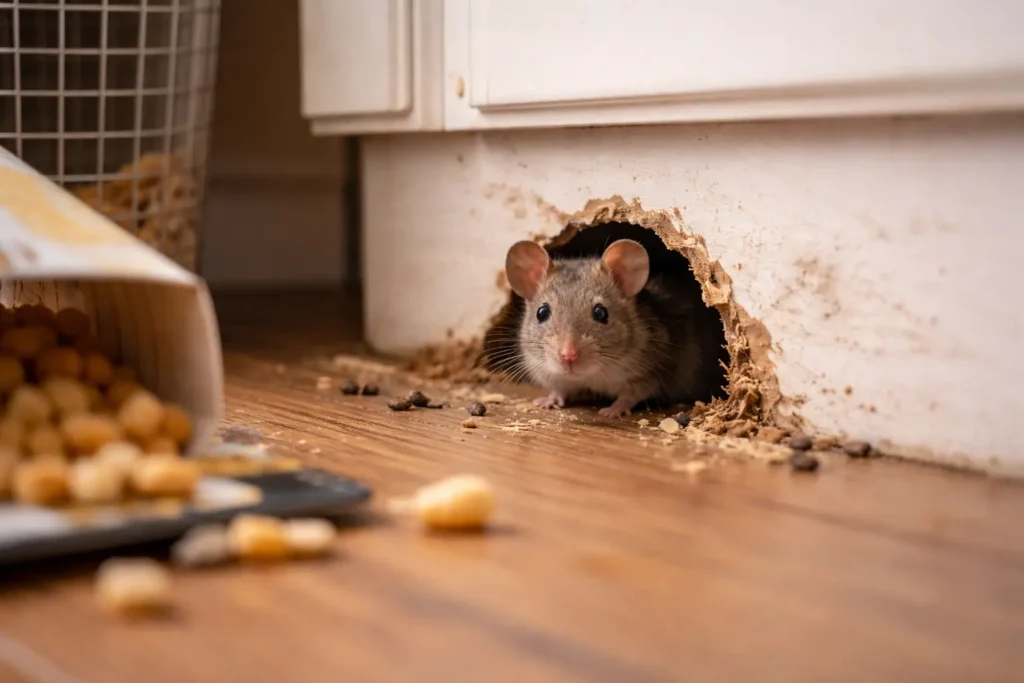
How Fast a Hidden Problem Can Grow
A single mouse can turn into many in a short time.
They reproduce quickly and don’t need much space. If food and shelter are available, the population can grow before you realize it.
This is why early action matters.
How to Check for Hidden Mice
If you suspect activity, start with a simple inspection.
Focus on:
- Behind kitchen appliances
- Under sinks
- Dark corners and storage areas
- Inside cabinets
Use a flashlight and look along walls where mice usually travel.
How to Prevent Mice from Hiding in Your Home
Prevention is always easier than removal.
Steps you can take:
- Seal small gaps and cracks
- Keep food in sealed containers
- Clean regularly to remove crumbs
- Reduce clutter in storage areas
These changes make your home less attractive to mice.
DIY vs Professional Help
Basic traps and home methods can help in small cases. But they often miss hidden nests.
Mice inside walls, attics, or crawl spaces are harder to deal with. Without finding the source, the problem can return.
When to Call a Professional
You should consider expert help if:
- You hear constant noises in walls
- Droppings appear in multiple areas
- The problem keeps coming back
A professional can locate hidden nests and close entry points properly.
Bottom Line
Mice don’t stay in one place. They move through your home, using hidden spaces to stay safe and undetected.
Knowing where to look is the first step. Kitchens, walls, attics, and storage areas are the most common places they hide.
If you notice early signs, act quickly. The longer they stay, the harder they are to remove.