
Rat Droppings in the Attic: What Homeowners Should Do
Finding rat droppings in your attic can be alarming. Even if you have not seen a rat, droppings are often one of the first signs that rodents are living inside a home.
Many homeowners discover the problem while storing items, checking insulation, or investigating scratching sounds coming from above the ceiling. Ignoring the signs can allow the infestation to grow and increase the risk of property damage.
The good news is that spotting droppings early gives you a chance to address the issue before it becomes a larger problem. In this article, you’ll learn how to identify rat droppings, understand the risks, and know what steps to take if you find them in your attic.
How to Identify Rat Droppings in the Attic
Not all droppings look the same. Knowing what to look for can help you determine whether rats may be present.
What Rat Droppings Look Like
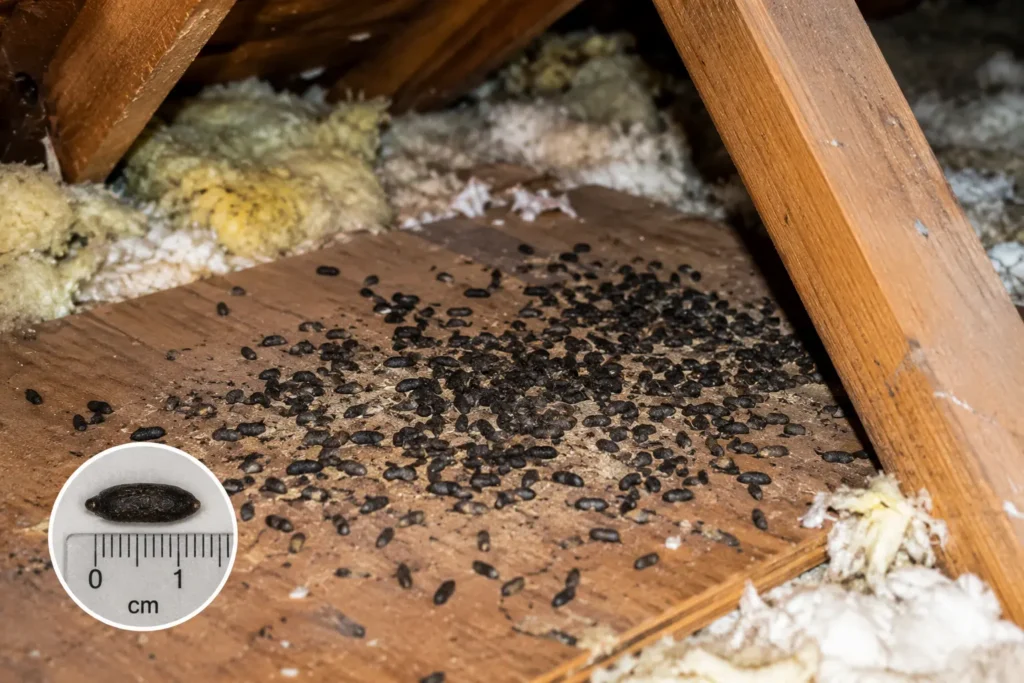
Rat droppings are usually:
- Dark brown or black
- Capsule-shaped
- About half an inch long
- Slightly pointed at the ends
Fresh droppings often appear shiny and moist. Older droppings become dry, dull, and crumbly over time.
Droppings are commonly found near nesting areas, along travel paths, or close to entry points.
Rat Droppings vs Mouse Droppings
Many homeowners confuse rat droppings with mouse droppings.
Mouse droppings are much smaller, often about the size of a grain of rice. Rat droppings are larger and easier to spot.
Knowing the difference is important because treatment methods may vary depending on the type of rodent involved.
Why Rats Leave Droppings in Attics
Rats spend much of their time searching for food, water, and safe shelter.
Attics provide many of the things rodents need to survive.
Attics Offer Protection
Attics are usually quiet and rarely disturbed. They provide protection from predators and harsh weather while giving rodents plenty of places to hide.
Insulation also makes nesting more comfortable.
Common Entry Points
Rats can enter attics through surprisingly small openings.
Common access points include:
- Roof vents
- Gaps around utility lines
- Damaged roofing materials
- Open eaves
- Spaces around chimneys
Once inside, they often travel between nesting sites and food sources, leaving droppings behind.
Signs You May Have an Active Rat Infestation
Droppings rarely appear on their own. There are often other signs that rodents are active inside the attic.
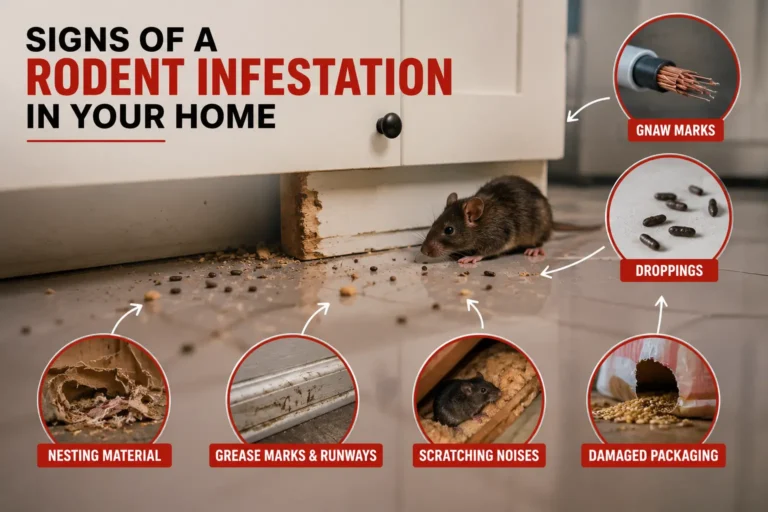
Scratching Noises at Night
Rats are most active after dark.
Many homeowners hear scratching, running, or scurrying sounds coming from above the ceiling during the evening.
Nesting Materials
Rats build nests using shredded paper, insulation, fabric, and other soft materials.
Finding these materials in hidden areas can indicate ongoing activity.
Strong Odors
A persistent musty odor may suggest the presence of rodents.
The smell often becomes stronger as droppings, urine, and nesting materials accumulate.
Damaged Insulation or Wiring
Rats frequently chew on insulation and electrical wiring.
This damage can lead to costly repairs and create safety concerns within the home.
Are Rat Droppings Dangerous?
Yes. Rat droppings should always be handled carefully.
Health Risks
Rodents can carry bacteria and diseases that may affect humans.
Exposure to contaminated materials has been linked to illnesses such as:
- Salmonella
- Leptospirosis
- Hantavirus-related infections
Although the risk varies, it is important to treat droppings with caution.
Airborne Contamination
One common mistake is sweeping or vacuuming dry droppings.
This can disturb contaminated particles and release them into the air.
Why Protective Equipment Matters
If cleanup is necessary, gloves and proper protective equipment should be used.
In cases involving large amounts of contamination, professional cleanup may be the safer option.
Can You Tell How Many Rats Are in Your Attic from Droppings?
This is one of the most common questions homeowners ask.
The short answer is no.
Finding a few droppings does not necessarily mean there is only one rat. Likewise, a large amount of droppings does not always indicate a large colony.
The number of droppings can be influenced by:
- How long rodents have been present
- How often they use certain areas
- The size of the nesting population
- The amount of available food and water
Because rats are active every day, droppings can accumulate quickly.
An inspection is usually the most reliable way to determine the extent of the infestation.
What to Do If You Find Rat Droppings in Your Attic
If you discover droppings, taking the right steps can help prevent the situation from getting worse.
Avoid Direct Contact
Do not handle droppings with bare hands.
Wear gloves and avoid touching contaminated materials whenever possible.
Do Not Sweep or Vacuum Dry Droppings
Sweeping can spread particles into the air.
Instead, follow proper cleaning procedures or seek professional assistance if contamination is extensive.
Look for Other Signs
Check for:
- Gnaw marks
- Nesting materials
- Entry points
- Damaged insulation
These clues can help determine whether rodents are still active.
Identify Possible Access Points
Inspect areas around roof vents, utility openings, and rooflines.
Even small gaps can allow rats to enter.
Schedule an Inspection
If activity appears ongoing, it may be time to schedule an inspection to determine the source of the problem and identify entry points.
How Professionals Remove Rats and Prevent Their Return
Removing rodents involves more than simply setting traps.
A complete solution typically includes several steps.
Inspection
The first step is identifying where rodents are entering and where they are nesting.
Trapping and Removal
Proper trapping helps remove active rodents while minimizing disruption to the home.
Many homeowners rely on professional rat control services when infestations become difficult to manage.
Rodent Proofing
Once rodents are removed, sealing entry points becomes essential.
Professional rodent proofing and exclusion helps reduce the chances of future infestations.
Cleanup and Sanitization
Droppings, urine, and nesting materials may need to be removed from affected areas.
Cleanup helps restore the attic and reduce contamination concerns.
Why Attic Rat Problems Are Common in Santa Barbara
Several local factors make attic infestations more common in this area.
Santa Barbara’s mild climate allows rodents to remain active throughout much of the year.
Other contributing factors include:
- Palm trees near homes
- Citrus trees that provide food
- Dense landscaping
- Older homes with small openings
- Easy roof access
These conditions make it easier for rodents to move between outdoor areas and residential properties.
As a result, many homeowners eventually seek professional rodent control in Santa Barbara when attic activity becomes difficult to manage.
Tips to Help Prevent Future Problems
Prevention is often easier than dealing with a full infestation.
Homeowners can reduce risk by:
- Trimming tree branches away from the roof
- Sealing gaps and openings
- Storing food in secure containers
- Removing outdoor clutter
- Monitoring attics and crawl spaces regularly
Routine inspections can also help catch problems before they become severe.
Final Thoughts
Rat droppings in the attic are usually a sign that rodents have been active inside the home. Acting quickly can help limit damage, reduce health concerns, and prevent the infestation from growing.
If you find droppings, avoid direct contact, look for other signs of activity, and inspect potential entry points. The sooner the issue is addressed, the easier it is to prevent further problems.
A professional inspection can help confirm whether rats are present and identify the most effective solution for protecting your home.