Signs of a Rodent Infestation in Your Home
Most homeowners don’t see a rat or mouse right away. Rodents are good at staying hidden, especially during the day. They often live inside walls, attics, crawl spaces, garages, and other areas that aren’t used often.
Because of this, an infestation can grow for weeks or even months before it is discovered. The earlier you spot the warning signs, the easier it is to address the problem and prevent costly damage.
In this guide, we’ll cover the most common signs of rodent activity and explain what homeowners should look for before a small issue becomes a larger one.
Why It’s Important to Identify Rodent Activity Early
Rodents do more than steal food from your pantry. They can damage property, contaminate living spaces, and create health concerns.
Prevent Property Damage
Rats and mice constantly chew to keep their teeth from becoming too long. Unfortunately, they don’t care what they chew on.
Common items that may be damaged include:
- Electrical wiring
- Insulation
- Wooden structures
- Drywall
- Plastic pipes
- Storage boxes
The longer rodents remain inside a home, the more damage they can cause.
Reduce Health Risks
Rodents leave behind droppings, urine, and nesting materials. These can contaminate surfaces and create unsanitary conditions.
Cleaning up after rodents often requires more than simply removing the animals themselves.
Avoid Larger Infestations
Rodents reproduce quickly. A few mice can turn into a much larger problem if they remain undetected.
Identifying activity early can help prevent a small issue from becoming a major infestation.
Lower Repair Costs
Finding rodents early often means fewer repairs, less cleanup, and lower overall costs.
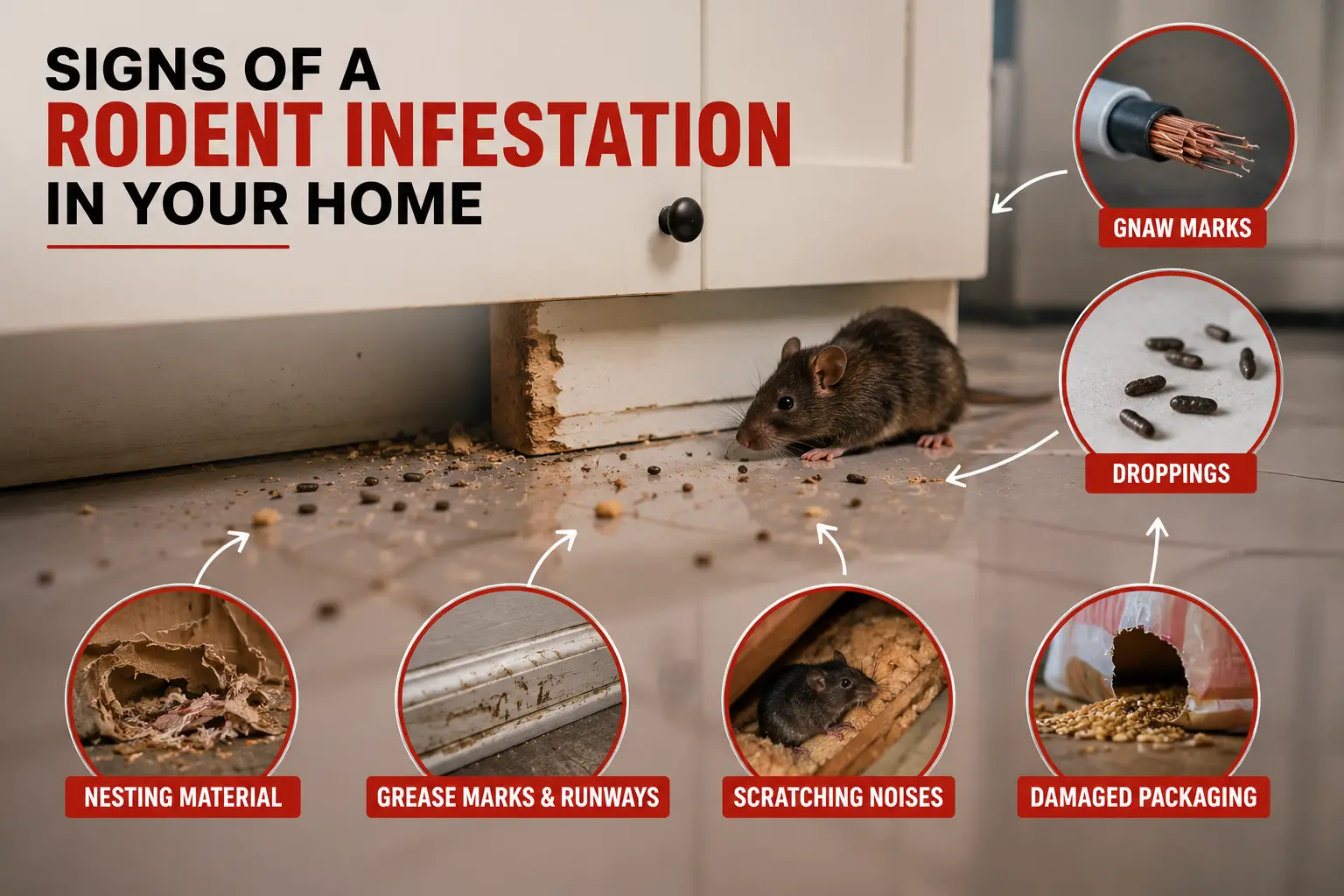
Rodent Droppings Around the Home
One of the most common signs of rodent activity is finding droppings.
What Rodent Droppings Look Like
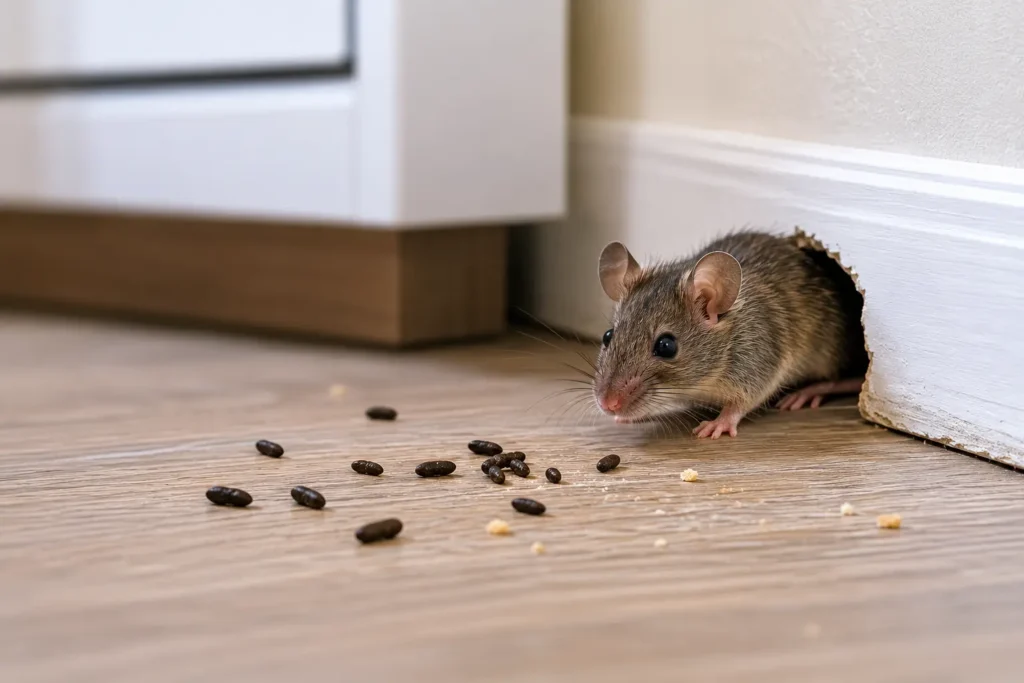
Mouse droppings are typically small and shaped like grains of rice.
Rat droppings are larger and darker.
Fresh droppings usually appear shiny and moist, while older droppings become dry and brittle.
Common Places to Find Droppings
Homeowners often discover droppings in:
- Kitchen cabinets
- Pantries
- Under sinks
- Garages
- Attics
- Crawl spaces
- Storage areas
Rodents usually leave droppings near food sources or along the paths they travel regularly.
Why Droppings Should Never Be Ignored
Even a small number of droppings can indicate ongoing activity. If new droppings continue to appear after cleaning, rodents are likely still present.
Scratching and Scurrying Noises
Many homeowners first suspect a problem because they hear unusual sounds at night.
Why Rodents Are Most Active After Dark
Rats and mice are generally nocturnal. They spend much of the day hidden and become active when the house becomes quiet.
Common Areas Where Noises Are Heard
Rodents often travel through:
- Walls
- Ceilings
- Attics
- Crawl spaces
- Under flooring
The sounds may include scratching, scurrying, gnawing, or light movement.
What These Noises May Indicate
Occasional sounds could mean a single rodent is present. Frequent activity often suggests multiple animals are using the same area.
Gnaw Marks on Household Items
Rodents must chew regularly to control the growth of their teeth.
Common Materials Rodents Damage
Look for chew marks on:
- Electrical wires
- Wood trim
- Cardboard boxes
- Plastic containers
- Food packaging
Small bite marks and rough edges are often early warning signs.
The Danger of Chewed Wires
Electrical wiring is one of the most concerning targets.
Damaged wires can increase the risk of electrical problems and, in some cases, create fire hazards.
Unusual Pet Behavior
Pets often notice rodent activity before people do.
Dogs May Detect Hidden Activity
Dogs may repeatedly sniff certain walls, cabinets, or corners of the home.
Some dogs become unusually focused on areas where rodents are hiding.
Cats Often Notice Movement
Cats may stare at walls, ceilings, or vents where they hear movement.
Many homeowners report unusual pet behavior before discovering rodents.
Why Pets Notice Problems Early
Animals have stronger senses than humans and can often hear or smell rodent activity long before it becomes obvious.
Finding Rodent Nests
Rodents build nests in quiet, protected locations.
Materials Used for Nesting
Common nesting materials include:
- Shredded paper
- Cardboard
- Fabric
- Insulation
- Dryer lint
Rodents gather these materials to create warm shelters for breeding and protection.
Common Nest Locations
Nests are frequently found in:
- Attics
- Garages
- Storage rooms
- Crawl spaces
- Behind appliances
Because these areas receive little traffic, rodents can remain unnoticed for long periods.
Grease Marks and Rodent Runways
Rodents often travel along the same routes every day.
What Grease Marks Look Like
As rats and mice move through tight spaces, oils from their fur can rub onto surfaces.
This may leave dark streaks or smudges along walls and baseboards.
Why Rodents Follow the Same Paths
Rodents prefer familiar routes that provide protection from predators and easy access to food.
These repeated travel paths are often called runways.
Where Homeowners Commonly Find Them
Look for marks along:
- Baseboards
- Garage walls
- Attic beams
- Utility lines
- Crawl space pathways
Strong Musty Odors
A persistent odor can be another sign of rodent activity.
What Causes the Smell
The odor often comes from:
- Urine
- Droppings
- Nesting materials
Over time, these odors can become stronger as activity increases.
Areas Where Odors Are Most Noticeable
Homeowners often notice unpleasant smells in:
- Attics
- Crawl spaces
- Garages
- Storage areas
When Odors May Signal a Larger Problem
A strong, lingering smell may indicate a larger population or an infestation that has been present for some time.
Damage to Food Packaging
Rodents are always searching for food.
Signs Rodents Have Accessed Stored Food
Check for:
- Torn bags
- Chewed boxes
- Small holes in packaging
- Scattered food debris
Even sealed food containers may show signs of chewing.
Foods That Commonly Attract Rodents
Rodents are drawn to:
- Pet food
- Grains
- Cereals
- Nuts
- Bird seed
Keeping food properly stored can help reduce attraction.
Rodent Sightings Inside or Around the Home
Actually seeing a rat or mouse is one of the clearest signs of an infestation.
Seeing Rodents During the Day
Rodents typically avoid daytime activity.
If you see them during daylight hours, there may be a larger population competing for food and shelter.
Outdoor Signs to Watch For
Pay attention to:
- Burrows
- Droppings
- Gnaw marks
- Rodents near trash areas
- Activity around sheds or garages
Outdoor activity can often lead to indoor infestations if entry points are available.
Common Rodents Found in Santa Barbara Homes
Several rodent species are commonly found throughout Santa Barbara and nearby communities.
Roof Rats
Roof rats are excellent climbers and often enter homes through roofs, trees, and attic openings.
Norway Rats
Norway rats prefer lower areas such as crawl spaces, foundations, and garages.
House Mice
House mice are small enough to squeeze through very tiny openings and often nest inside walls and storage areas.
Why Rodent Activity Is Common in Santa Barbara
Several local factors support rodent activity, including:
- Mild year-round temperatures
- Coastal conditions
- Dense vegetation
- Residential neighborhoods near natural spaces
These conditions provide food, water, and shelter throughout the year.
What to Do If You Notice These Signs
If you notice one or more of these warning signs, taking action early is important.
Inspect the Property Carefully
Check attics, garages, crawl spaces, and storage areas for additional evidence.
Remove Food and Water Sources
Store food in sealed containers and clean up crumbs or spills promptly.
Identify Possible Entry Points
Look for gaps around:
- Doors
- Windows
- Utility lines
- Vents
- Foundations
Consider a Professional Inspection
A professional inspection can help identify hidden activity, entry points, and damage that may not be immediately visible.
Final Thoughts
Rodents rarely announce their presence. In most cases, homeowners discover clues long before they actually see a rat or mouse.
Droppings, scratching noises, gnaw marks, nests, unusual pet behavior, and strong odors are all signs that should not be ignored.
The sooner these warning signs are addressed, the easier it is to protect your home from damage and avoid a larger infestation. Paying attention to these early indicators can help homeowners act before a small problem turns into a costly one.